
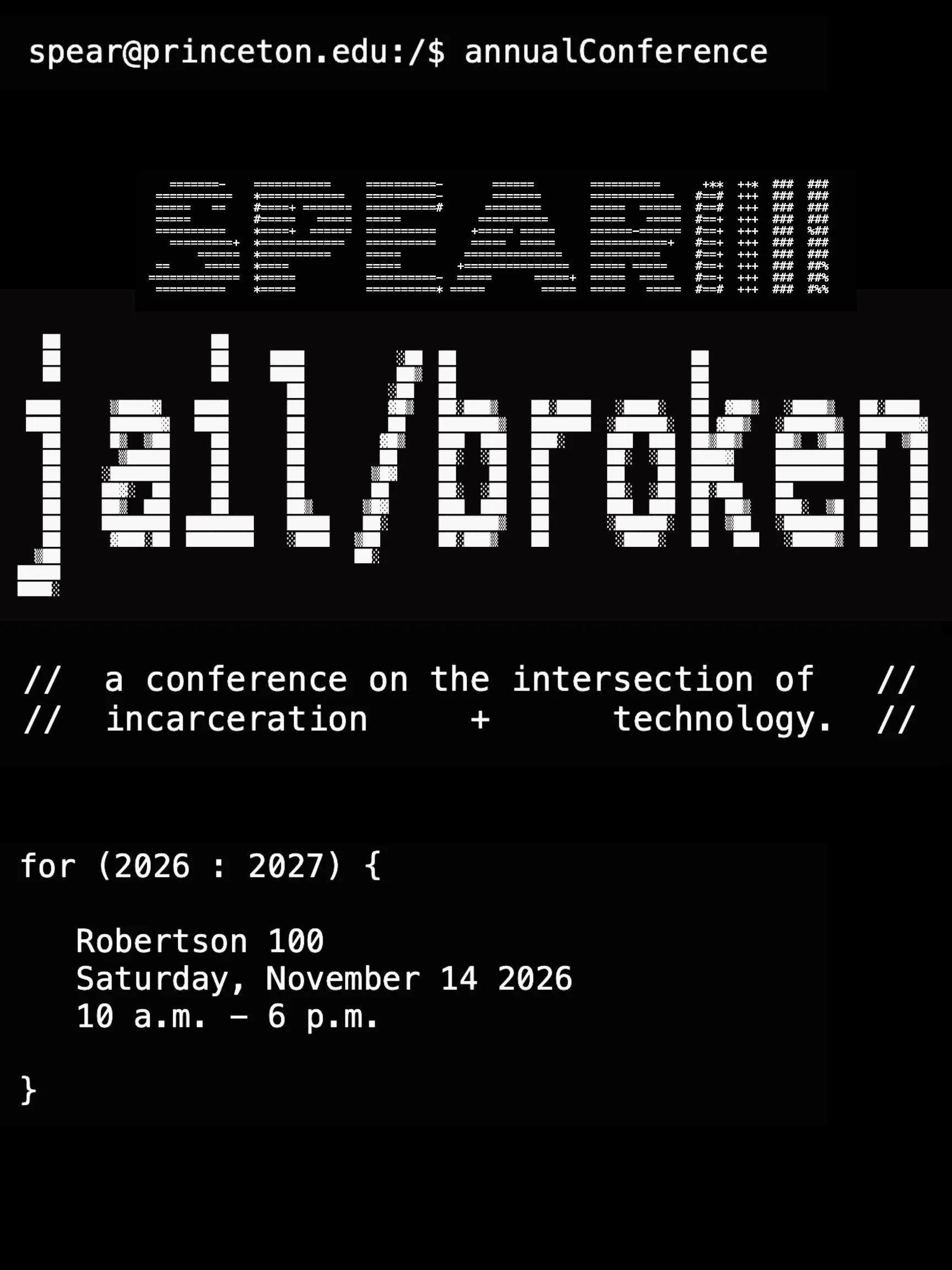
jailbroken
November 14th, PRINCETON UNIVERSITY

As surveillance tools and technology become increasingly embedded in policing, immigration enforcement, courts, prisons, parole, schools, reentry, and other facets of the criminal legal system, we hope to examine how technology expands incarceration both within and beyond prison walls.
How do carceral technologies travel across borders, including through immigration enforcement?
How do data systems and surveillance tools, such as facial recognition and cell-site simulators, shape policing and criminalization before incarceration?
How does technology extend carceral control beyond prison walls (electronic monitoring, parole supervision, school and welfare surveillance, and community-based forms of digital control)?
How is technology used inside prisons themselves as a mechanism of surveillance and profit? Are there positive uses for technology in prisons such as a potential tool for education, accountability, and resistance?
How do digital barriers shape reentry, from housing and employment applications to digital literacy?
Rather than treating technology as neutral or inevitable, we hope to think about the political choices behind its design and deployment, the communities most affected by it, and the possibilities for greater accountability and abolitionist alternatives.
SATURDAY, November 14th
-
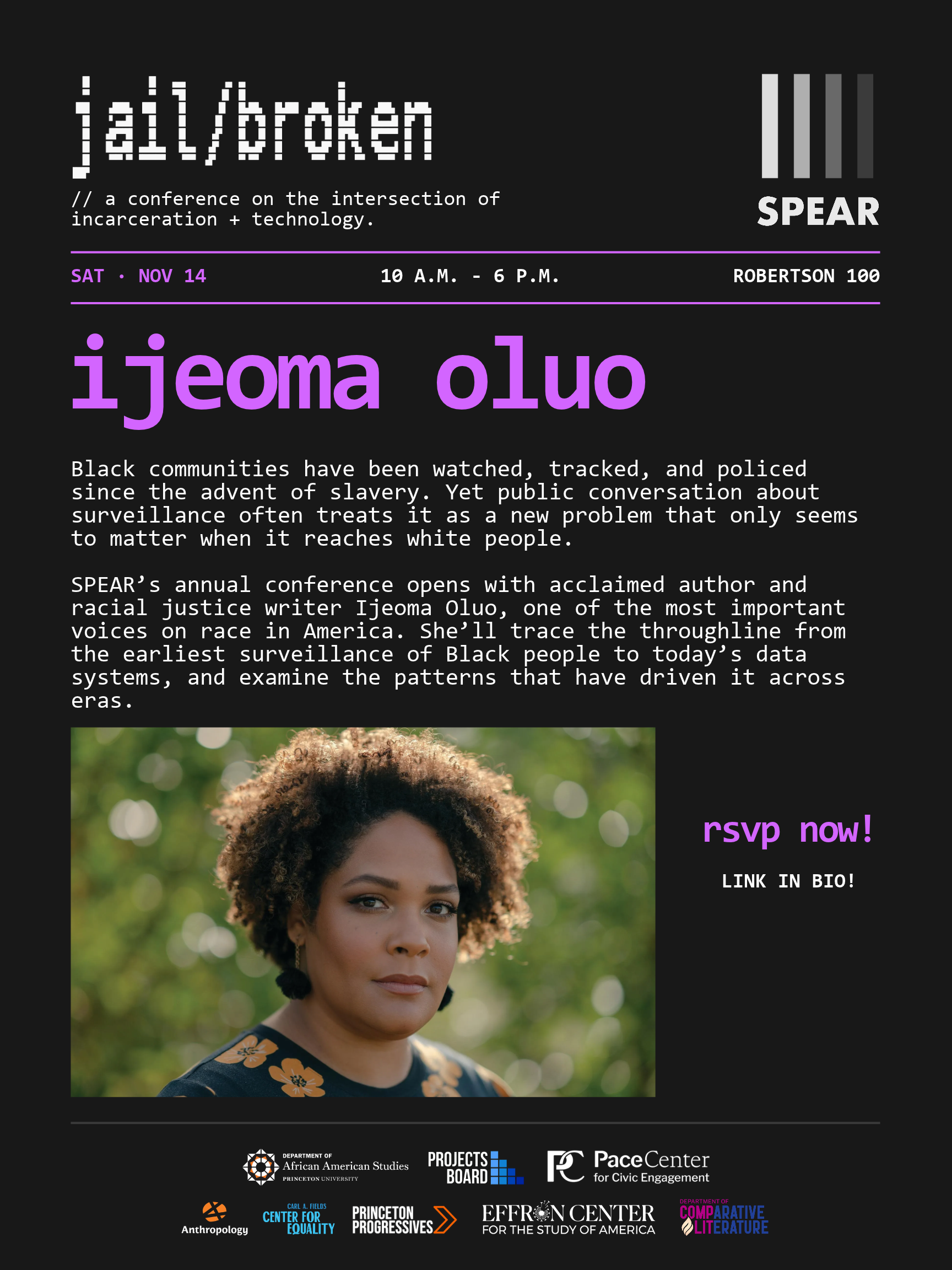
The day opens with a keynote from writer Ijeoma Oluo, discussing the historical throughline of surveillance in the United States and the marginalization of minorities
-
We tend to treat surveillance as a question of privacy. But who gets watched, and who gets caught, has never been evenly distributed. This panel situates surveillance and the prison industrial complex within a broader arc of authoritarianism, tracing how these systems connect across policing, incarceration, and the border, and what that reveals about the direction the country is heading.
-
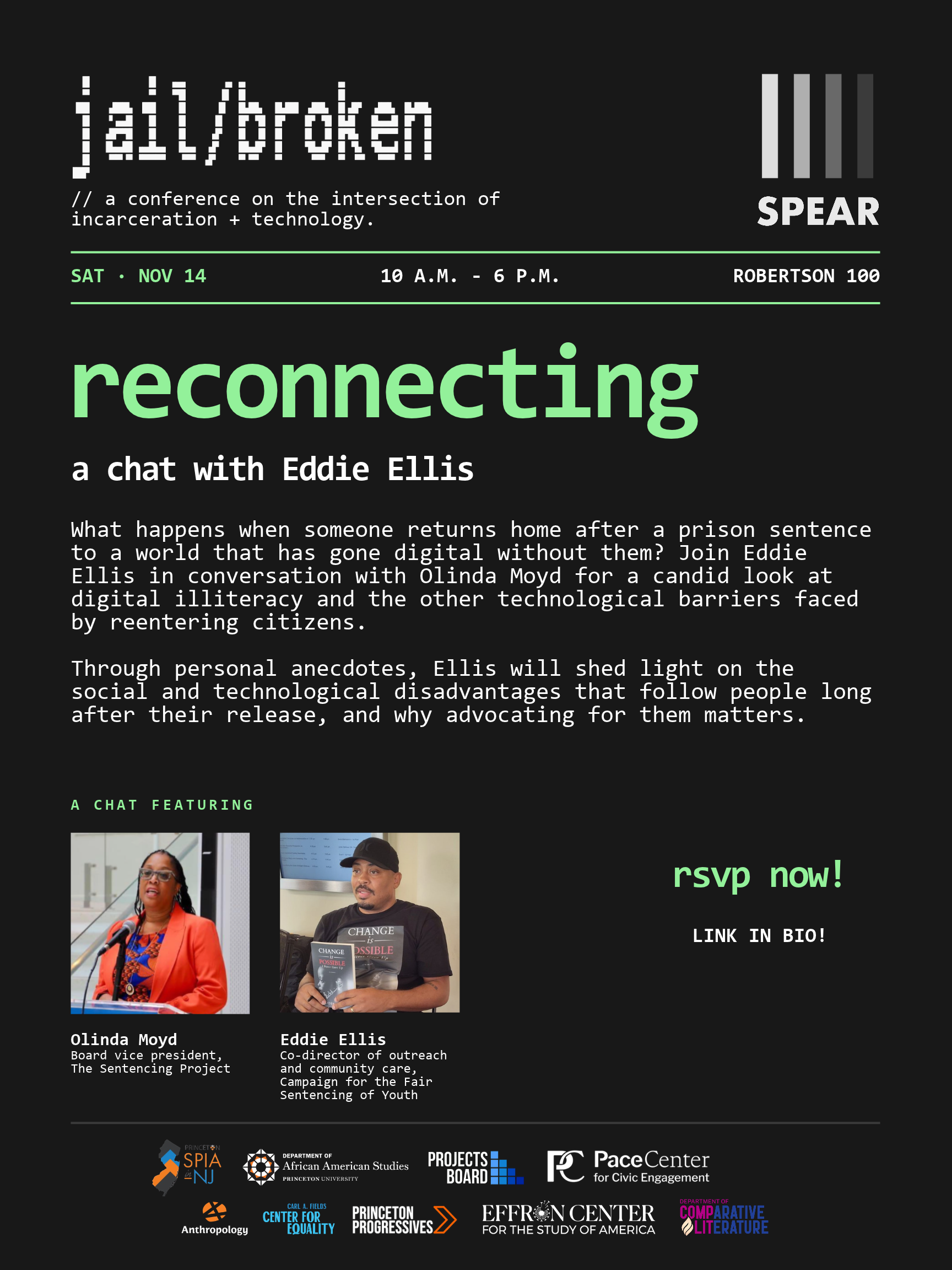
Coming home from prison is hard enough. Coming home to a world that has gone fully digital is its own kind of barrier. Eddie Ellis reflects on navigating digital literacy as a reentering citizen, in conversation with a longtime social justice advocate, on what technology really means for people rebuilding their lives.
-
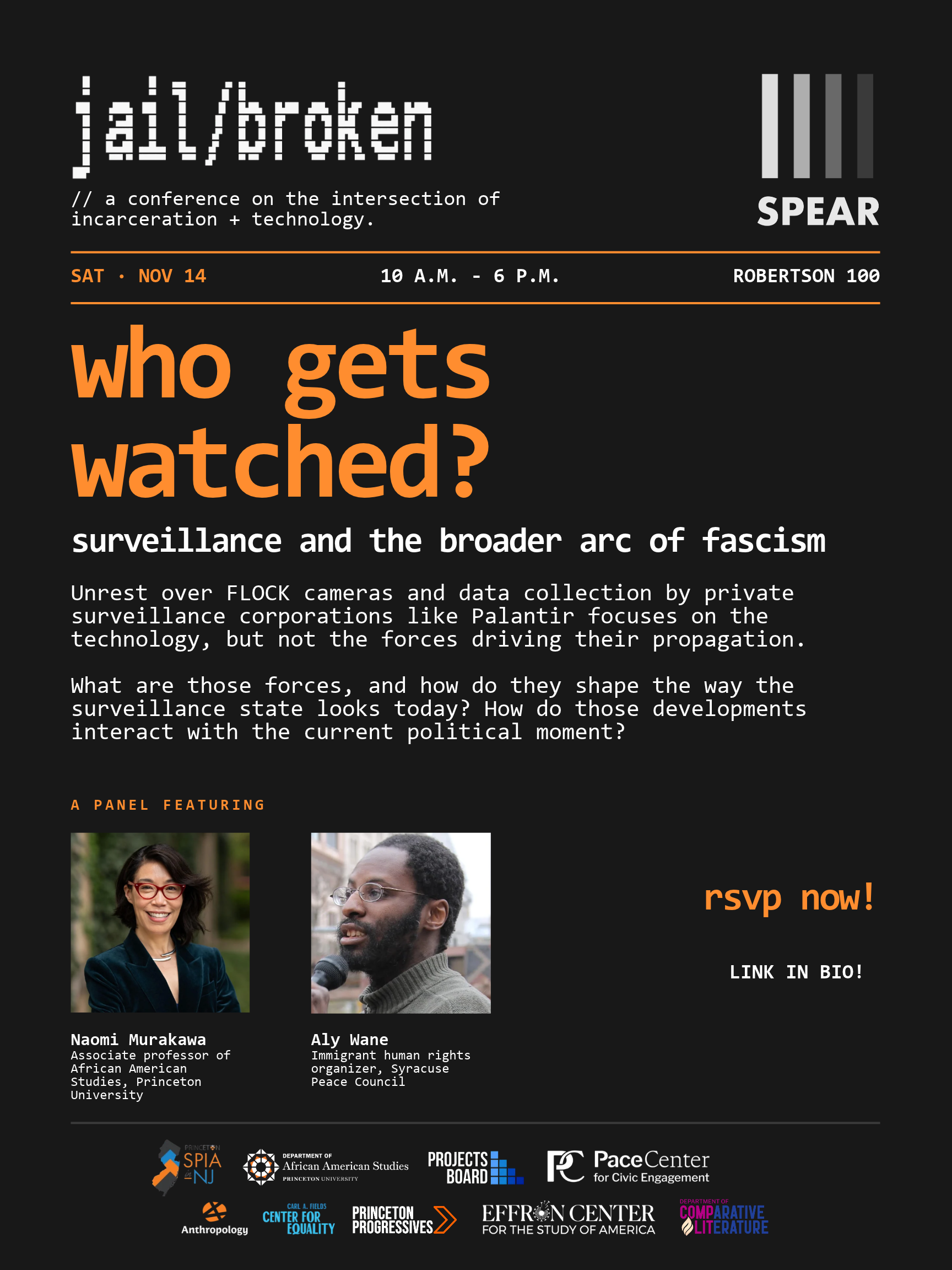
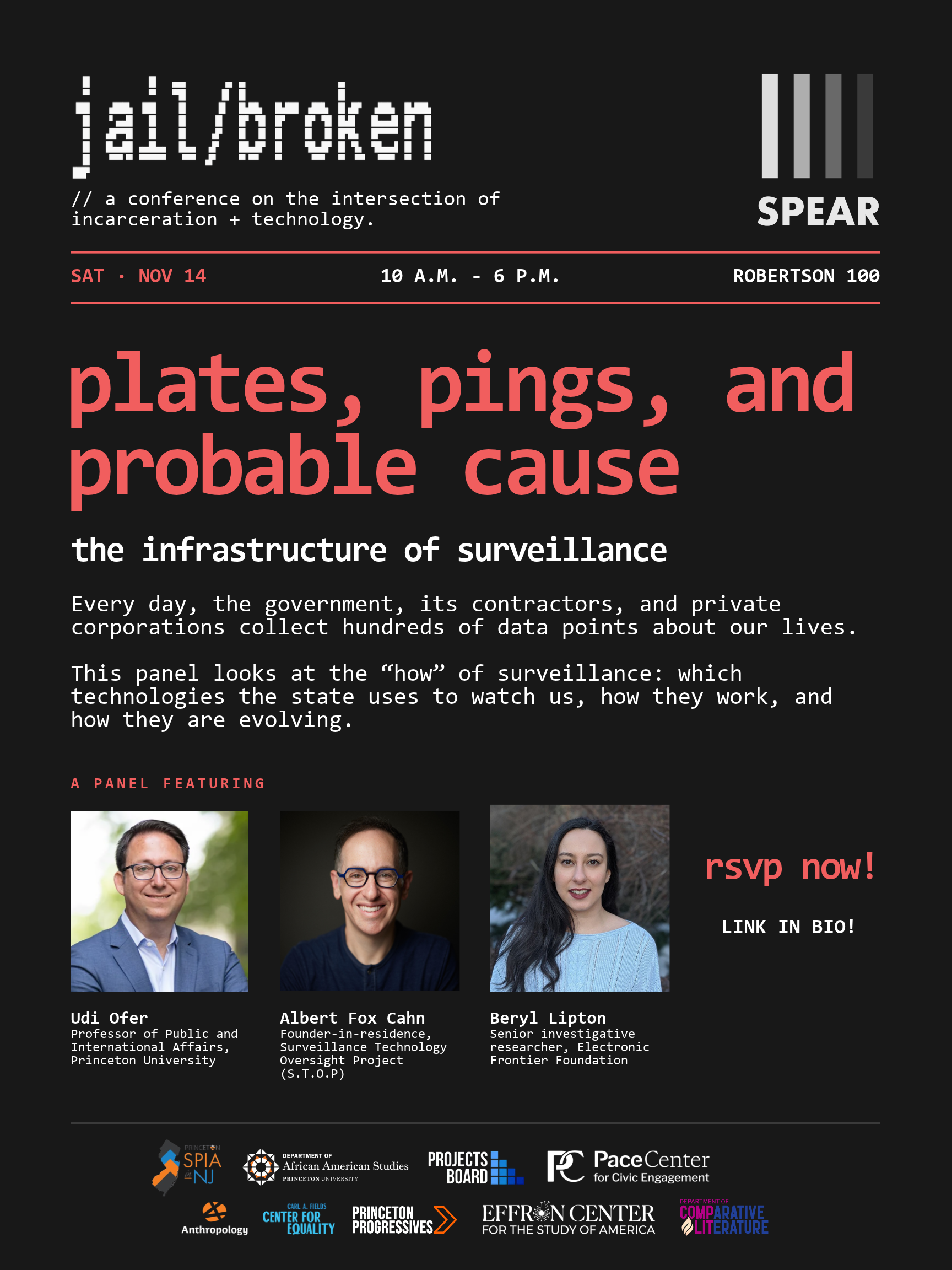
Flock cameras and data collection by private surveillance companies like Palantir dominate the headlines, but what about the forces driving their spread? This panel looks past the technology itself to the political and economic forces shaping the surveillance state, and what it looks like in the United States today.
-
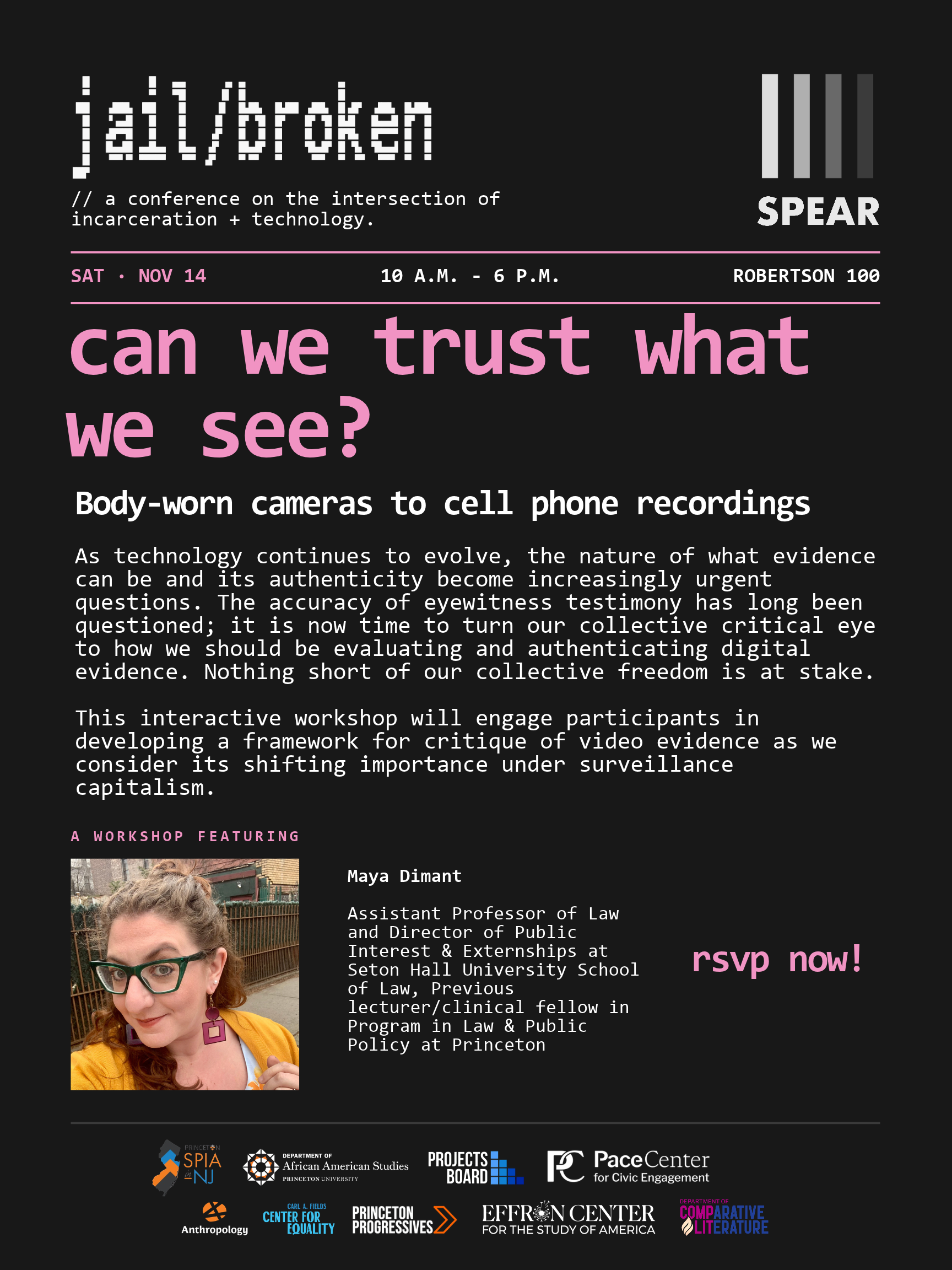
The criminal legal system relies on evidence to demonstrate culpability or lack thereof. People are exonerated or locked up based on a judge or jury's understanding and analysis of evidence. As technology continues to evolve, the nature of what evidence can be, how it is gathered, and its authenticity become increasingly urgent questions. The accuracy of eyewitness testimony has long been questioned; it is now time to turn our collective critical eye to how we should be evaluating and authenticating digital evidence. Nothing short of our collective freedom is at stake. This interactive workshop will engage participants in developing a framework for critique of video evidence as we consider its shifting importance under surveillance capitalism.
-
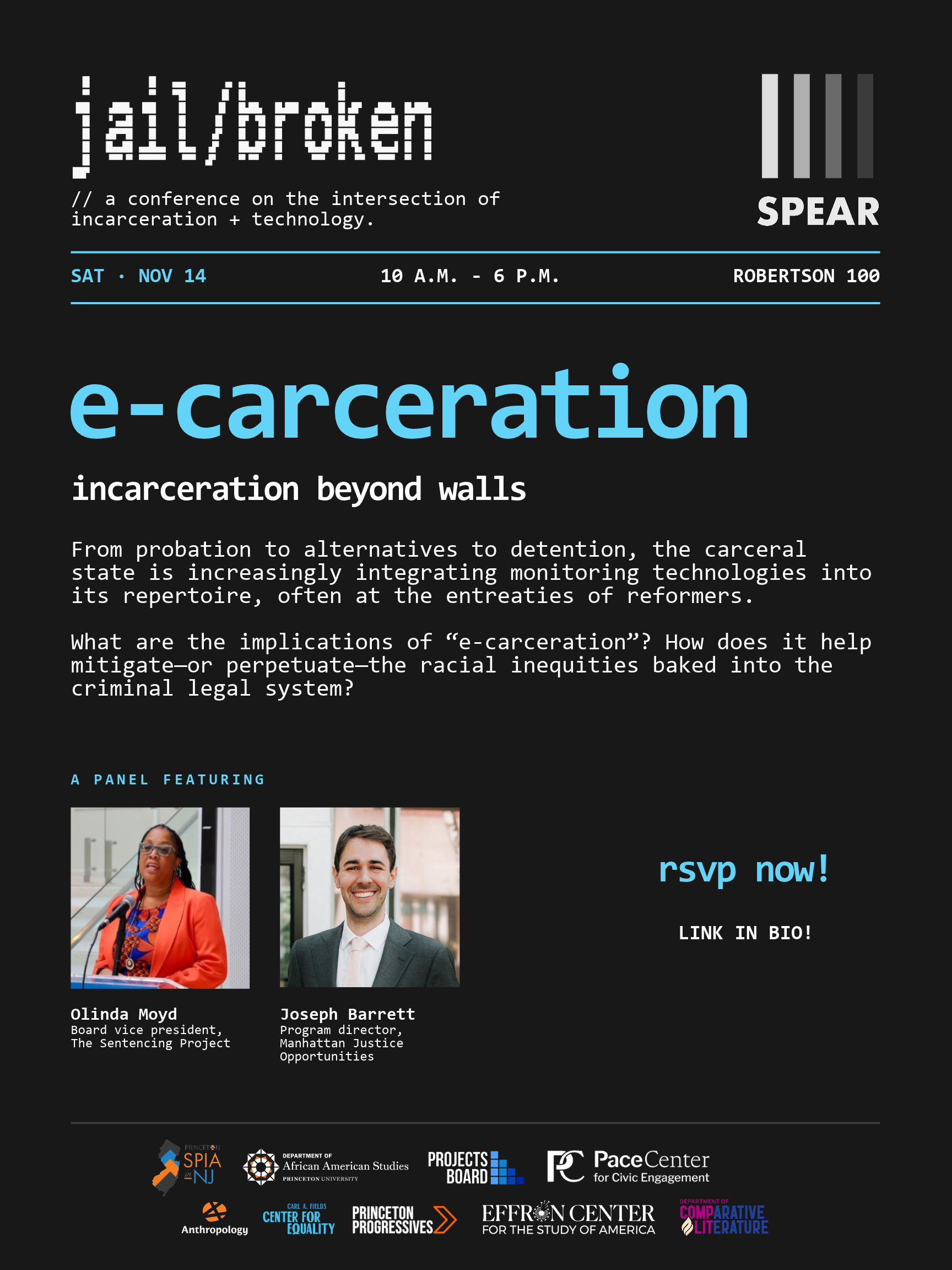
Release from prison is supposed to mean freedom. But probation, electronic monitoring, and so-called alternatives to detention have extended the reach of incarceration far beyond the prison walls. This panel asks what carceral control looks like when it follows people home, and where the limits of a technological fix really lie.
-
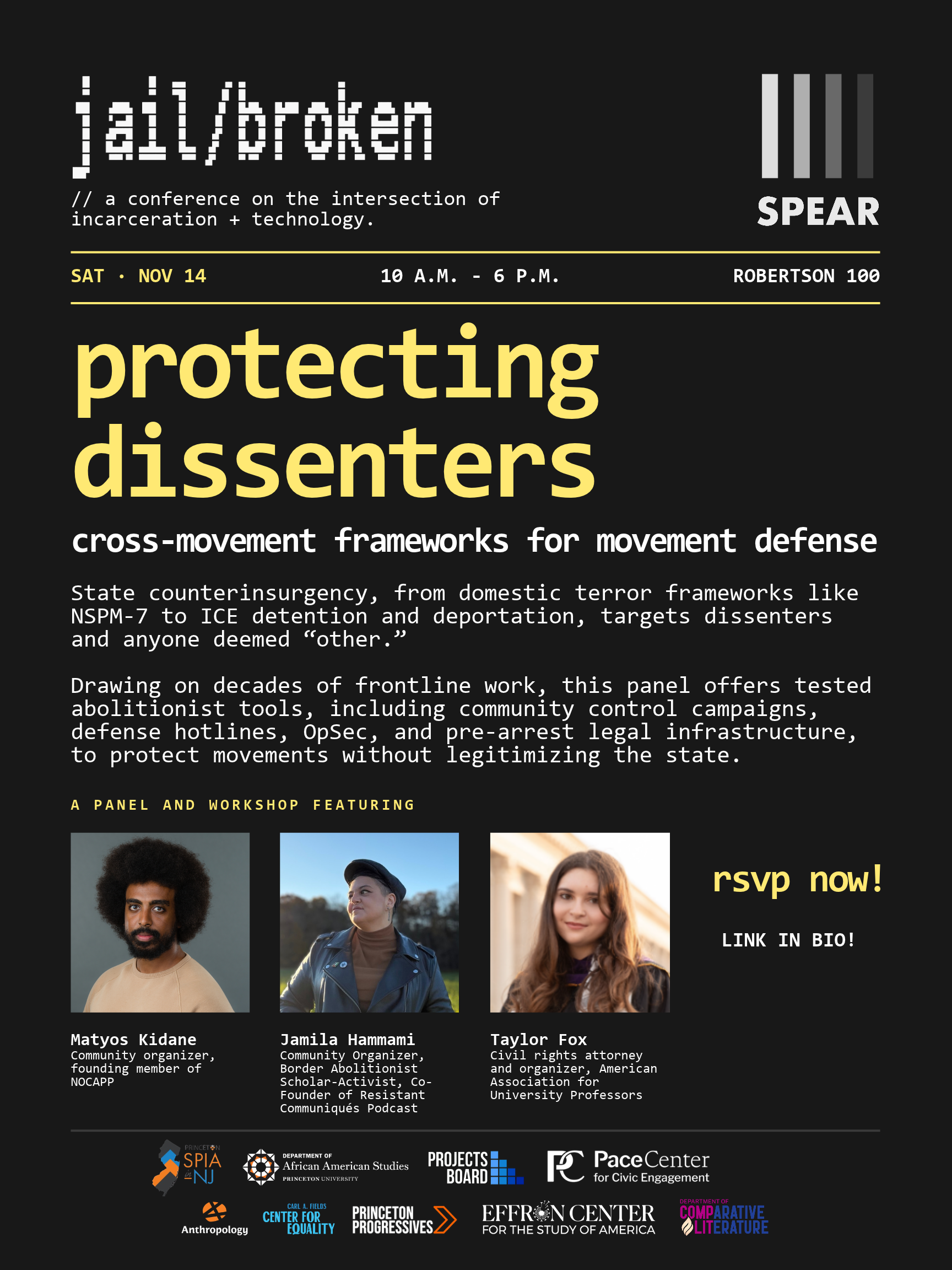
If the surveillance state is always watching, how do we protect ourselves and each other? Part panel and part workshop, this closing session turns from diagnosis to defense, with practical strategies for staying safe in a world built to track dissent.
Logistical Information
-
Our conference will take place in Robertson Hall 100, or the Arthur Lewis Auditorium, next to Prospect Street. You can type 20 Prospect Ave, Princeton, NJ 08540, into Google Maps
-
Our campus is easily accessible via public transportation! You can take the Northeast Corridor line on NJ Transit from New York City, Newark, New Brunswick, and Trenton (with connections to Philadelphia via SEPTA). Get off at Princeton Junction and take the “Dinky” shuttle, then walk north towards McCosh Hall. You can also take NJ Transit buses 600, 605, or 606.
Visitor parking rules on campus differ on weekdays and weekends. For visitors on Friday, we recommend parking in the Stadium Drive Garage and taking the TigerTransit bus to the McCosh Walk on Washington Road stop. You must register for a visitor’s parking permit ahead of time. See the above map for details, and find more information here.
For visitors on Saturday, you are free to park in any university lot — the closest to our location are Lots 10 and 13 or the Prospect Avenue Garage. (See above map.)
-
We aim to make this conference as accessible as we can. If you would like to request accommodations, please notify us in your registration.
Robertson 100, where the main events will be taking place, is wheelchair-accessible. To view the accessibility information for buildings across campus, please visit https://www.accessableusa.com/princeton-university.
-
We will provide lunch and dinner for the conference!
With any questions, comments, or concerns, please reach out to SPEAR co-presidents Vaishnavi Murthy (vaishnavimurthy@princeton.edu) and Raghav Pradhan (raghavpradhan@princeton.edu).